For a person who is interested in building an energy efficient home in these times of rising costs, including energy costs, the amount of information is daunting if not downright scary. We'll try to pare the information down to something manageable by looking at some of the ways we can build and keep our energy demands under control. Our solar energy facts give us a number of options:
-Conventional structure-stick and wood
-Earth bermed-using earth for a moderator
-Rammed earth
-Rammed earth blocks
-Adobe
-Straw
-Earthbag
An energy efficient conventional house can cost anywhere from around sixty thousand to more than two hundred thousand dollars, depending on how much energy you, yourself are willing to invest. One thing to bear in mind-how much skill do you have for this kind of project? To build a successful energy saving house of this sort would require super insulation, photovoltaic or wind power, and solar hot water, as well as some form of space heating.
A well designed earth bermed structure has only minimal needs for space heating. I've seen many options for this including wood stove, baseboard heating, and European tile stoves. Combined with solar hot water and either photovoltaic or wind energy, this is an excellent way to go, and is adaptable to any climate. I've seen costs for this type of construction from the seventy thousands to over two hundred thousand.
Rammed earth is a viable concept probably only if you are prepared to do a tremendous amount of physical labor, or you have laborers available. This method involves using forms between which dirt is compacted layer after layer until reaching the desired height. If you are really interested in this process, I recommend two books, Comfort in Any Climate, by Michael Reynolds-Solar Survival Press; and The Rammed Earth House, by David Easton-Real Goods Press.
One of my favorite choices is rammed earth blocks. This concept was developed several decades ago in Columbia with the invention of the
cinva block ram. This is a mechanical device with a long handle with which one can compress soil to about half its former volume. With the right mixture of soil, water, and about 3% Portland cement, we can make earthen blocks that are very tough, strong, and cheap-really excellent building materials. These blocks are a product that can be pretty much used anywhere in the world.
Adobe is another of our prime choices, according to our solar energy facts. Some people might think adobe construction might be limited to our southwest, but for a slightly higher cost adobe bricks can be stabilised using either 3 to 6% asphalt emulsion or 5 to 10% Portland cement. There is a strong customer demand for adobe. In New Mexico half of all new homes selling for more than $300,000. incorporate some form of earthen construction. Most are adobe, but some of them are using new earthen technology.
In the last few years, building with straw bales has become very popular as a means of keeping costs down and providing a great deal of insulation. There are many good designs to choose from and this is another method of construction that is usable anywhere in the country, as long as one can locate the straw at a good price. This method of construction either uses the structural integrity of the stacked bales, themselves, or a post and beam construction with the bales just used as walls and insulation. Either scheme requires that the bales be stuccoed inside and out. This type of housing can be very cost effective with the proper design.
One method of construction that has gained a certain popularity in recent years is called earthbag construction. Basically it consists of polyester bags, filled with soil and stacked according to the design. The bags are nearly always stacked in circular patterns so as to achieve a certain rigidity. Barbed wire is laid between the courses to give strength to the structure. Plaster is applied to the outside to provide waterproofing. Solar energy facts assure us that this is a legitimate form of construction and seriously to be considered.
These are some of the main options we have when considering building with energy efficiency in mind. Before any kind of choice is made, the prospective builder needs to consider climate and land considerations. Size is another thing to think about because the smaller a structure is, the less energy it will require. The proper preparation for a venture of this sort will certainly make the outcome more satisfying; so, the more research, the better.
Showing posts with label solar energy. Show all posts
Showing posts with label solar energy. Show all posts
Wednesday, August 26, 2009

Solar Energy for the Homeowner
Welcome to the solar energy revolution! We are all going to be involved in the drive toward energy independence, that is, becoming independent from foreign oil. Gasoline is selling for more than six dollars a gallon in both Germany and the U.K, and we know that, for all kinds of reasons, it's bound to go up much more in the not-so-far future. Coal is plentiful here in the U. S, but the efforts to clean it up are going to be painful and slow in coming. The transition to solar power is also going to be painful and costly, but eventually it will begin to pay for itself. For homeowners especially, a move toward solar energy is really a wise investment, whether they are building new or doing remodeling.
Some banks are beginning to loan money for solar retrofits. The solar energy facts clearly show us that once the payoff is complete for such a loan, the homeowner is ahead a great deal-even as much as the whole of his total former energy costs. We have many suppliers in this country who can design systems for every environment and climate.We're going to look at four main systems for a homeowner to consider when going solar:
-Solar hot water
-Solar electric or photovoltaic
-Geothermal heat pump
-Wind turbine
Solar hot water is a terrific investment due to low cost and high efficiency. Space heating can be incorporated for a slightly higher expenditure. An outlay of three to ten thousand dollars could lower your energy demands from thirty to fifty per cent. Our solar energy facts show us that hot water represents the second highest energy demand in U. S. households.
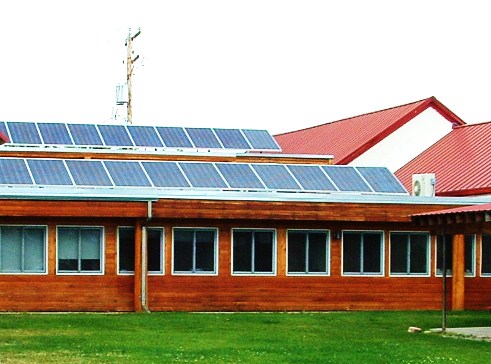
Solar electric or photovoltaic is another of my personal preferences because this is an arrangement usable by almost every household. A system consisting of photovoltaic panels with a grid-tie unit eliminates the need for storage batteries, and if supplied with enough solar panels, can even pay a homeowner for excess electricity generated. The costs for such a system are probably going to run from five to twenty thousand dollars. Photovoltaic coupled with solar hot water can be an ideal solution for many homeowners.
Geothermal heat pump- Although geothermal is not really solar energy, it is certainly renewable energy. Geothermal uses the constant temperature of the earth along with a sophisticated heat pump to either heat or cool the home. There are also designs which supply hot water as a part of the process. The installation of this scheme requires either a well be drilled or extensive trenching be done. The cost of this along with the heat pump may be somewhat costly. Photovoltaics or wind would also be an important part of any complete project.
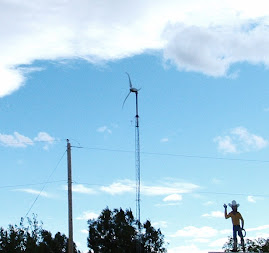
Wind power is an extremely good source of power for anyone who lives in an area of plentiful wind and preferably doesn't have neighbors too close. If a grid-tie is not possible, storage batteries can be installed. Costs for wind power machines can range anywhere from five hundred dollars for a small unit to as much as twenty thousand for a high end grid-tie unit with a sixty foot tower.
When we lok at headlines that say, "Pump prices rising despite glut of gasoline" (Chris Kahn-AP) or this: "Oil prices rise again" (APA), the solar energy facts assure us that by investing in solar power we can go a long way toward guarding our energy future. With the abundant sun's energy in the southwest and the winds available in other parts of the country, our goal of energy independence is much brighter.
Solar Energy Facts-Hot Water
Solar water heating is a good first step when considering going solar due to low cost and high efficiency. When we look at solar energy facts we find that hot water represents the second highest energy demand in U.S. households. On an average most water heaters use as much energy in a year as a medium-sized car. A typical solar water heating system reduces the need for gas or electric water heating by about two-thirds.
Our solar energy facts tell us systems that use direct heating of water using the sun's rays consist of two main parts: 1. a collector which heats the water, and 2. a storage tank. The main types of collectors are integral tank and flat-plate. The flat-plate collectors are the most widely used for domestic solar water heating. They have an operating range from well below 0 deg f to around 180 deg f, which is almost exactly what is required. Flat-plate collectors are rectangular shallow boxes typically four by eight feet with a strong frame and glazing fastened to the front. The frame has a solid back and an absorber plate just beneath the glazing. The absorber plate has riser tubes, usually half-inch copper pipes running vertically, spaced 3 to six inches apart, and welded into manifold pipes which are positioned horizontally top and bottom. Copper fins welded to the risers help with the efficiency of the absorber. Insulation provided beneath the absorber also contributes to the efficiency of the whole unit. Low iron tempered glass is preferred for the glazing.
There are a number of tank options available for the person desiring to invest in solar hot water. The type of tank needed depends on several factors-climate, size, and cost being among the most important. One of the simplest designs calls for a flat-plate collector using coolant or anti-freeze coupled with a regular hot water tank with an insertable heat exchanger installed. This is called a closed loop system. This arrangement also requires a pump for cycling the anti-freeze from the collector, through the heat exchanger, and back to the collector.
These systems can cost anywhere from around a thousand dollars for a small do-it-yourself project, to as much as six to fifteen thousand for a high end, northern climate deluxe product. Federal tax credits are available nationwide and state credits and grants are available in some states.
The solar energy facts assure us that a domestic solar water heater is a practical and cost effective way to generate hot water for a home. Today's solar thermal industry includes reliable, efficient products and trustworthy professionals who can install and maintain your equipment.
Energybuff
Our solar energy facts tell us systems that use direct heating of water using the sun's rays consist of two main parts: 1. a collector which heats the water, and 2. a storage tank. The main types of collectors are integral tank and flat-plate. The flat-plate collectors are the most widely used for domestic solar water heating. They have an operating range from well below 0 deg f to around 180 deg f, which is almost exactly what is required. Flat-plate collectors are rectangular shallow boxes typically four by eight feet with a strong frame and glazing fastened to the front. The frame has a solid back and an absorber plate just beneath the glazing. The absorber plate has riser tubes, usually half-inch copper pipes running vertically, spaced 3 to six inches apart, and welded into manifold pipes which are positioned horizontally top and bottom. Copper fins welded to the risers help with the efficiency of the absorber. Insulation provided beneath the absorber also contributes to the efficiency of the whole unit. Low iron tempered glass is preferred for the glazing.
There are a number of tank options available for the person desiring to invest in solar hot water. The type of tank needed depends on several factors-climate, size, and cost being among the most important. One of the simplest designs calls for a flat-plate collector using coolant or anti-freeze coupled with a regular hot water tank with an insertable heat exchanger installed. This is called a closed loop system. This arrangement also requires a pump for cycling the anti-freeze from the collector, through the heat exchanger, and back to the collector.
These systems can cost anywhere from around a thousand dollars for a small do-it-yourself project, to as much as six to fifteen thousand for a high end, northern climate deluxe product. Federal tax credits are available nationwide and state credits and grants are available in some states.
The solar energy facts assure us that a domestic solar water heater is a practical and cost effective way to generate hot water for a home. Today's solar thermal industry includes reliable, efficient products and trustworthy professionals who can install and maintain your equipment.
Energybuff
Subscribe to:
Posts (Atom)